.png)

Key Points
- The Justice Department sued Penn State on November 5, 2026, in what it calls its 27th lawsuit over in-state tuition for undocumented students.
- First- and second-year students at University Park pay $21,198 in 2026-27 tuition and fees as Pennsylvania residents and $44,894 as nonresidents.
- Pennsylvania has no state law on the issue, so the case targets a university policy, the same approach the DOJ took against the University of Delaware in October.
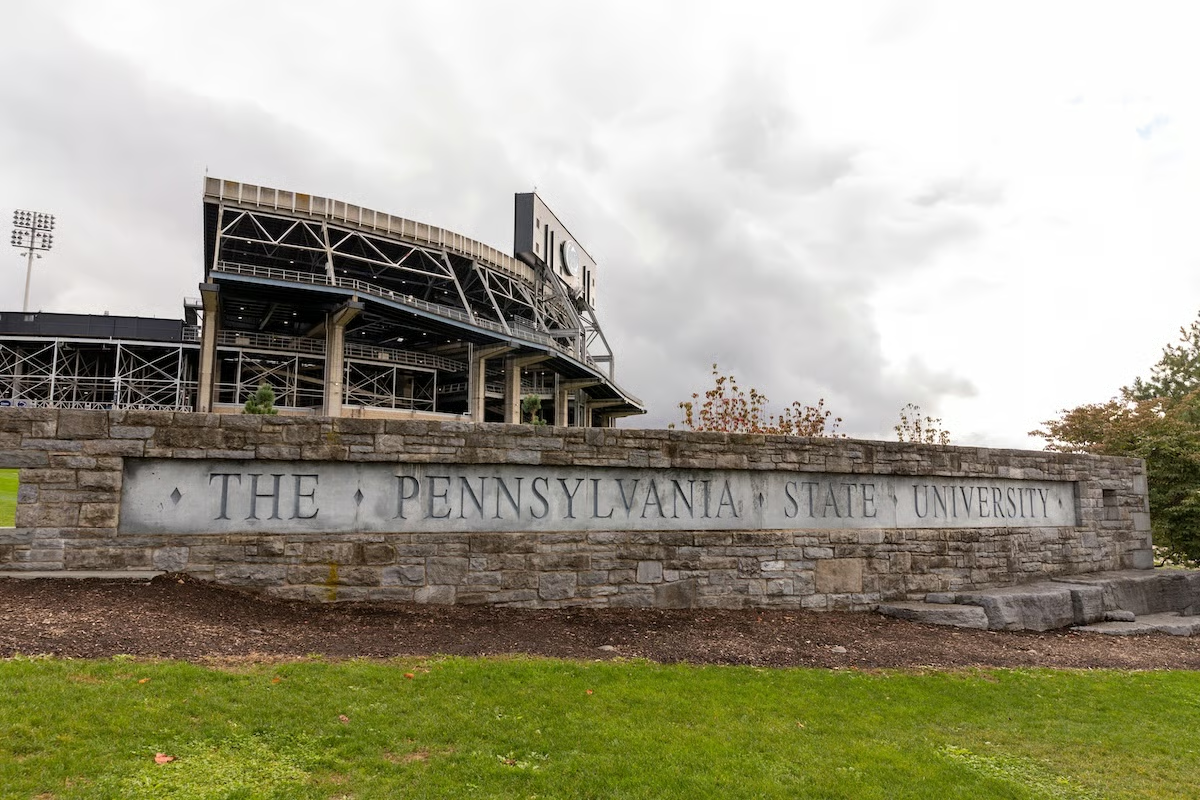
The U.S. Department of Justice sued Penn State on November 5, 2026, over a university policy that lets some undocumented students pay in-state tuition. The DOJ calls it its 27th lawsuit of this kind, adding to the challenges against tuition laws in 25 states and Washington, D.C. we covered in September.
The 14-page complaint (PDF File) names Penn State and its Board of Trustees. It asks a judge to declare the policy unconstitutional and to bar Penn State from offering in-state tuition under it or any similar policy.
A Penn State spokesperson told Onward State the university is “aware of the complaint and is reviewing it.”
Save For Later
Would you like to save this?
Why It Matters
The price difference at stake is large. For 2026-27, Penn State lists University Park tuition and fees at $21,198 for first- and second-year Pennsylvania residents and $44,894 for nonresidents, a $23,696 difference each year. Over four years that adds up to about $94,800 before any increases, which is why we tell families to think hard before applying to an out-of-state school.
The tuition rate carries even more weight for undocumented students, who can’t receive federal financial aid such as Pell Grants or federal student loans.
The complaint doesn’t say how many students use Penn State’s policy, unlike DOJ filings in states such as Arizona, where it counted at least 720 students paying in-state rates.
What Does Penn State’s Policy Require?
Penn State’s page for undocumented students says students “with or without DACA” can qualify for in-state tuition if they meet the university’s residency requirements. Those include four years at an accredited Pennsylvania high school, plus a diploma from one or a Pennsylvania GED.
That’s a longer track record than the 12 consecutive months of Pennsylvania residence Penn State’s standard residency requirements presume, according to the complaint.
Penn State Resident Vs. Nonresident Costs For 2026-27
| Cost | PA Resident | Non-PA Resident | Difference |
|---|---|---|---|
| University Park Tuition And Fees | $21,198 | $44,894 | $23,696 |
| Penn State Harrisburg Tuition And Fees | $16,018 | $27,534 | $11,516 |
| University Park Total Estimated Cost | $41,772 to $46,680 | $65,468 to $71,876 | $23,696 to $25,196 |
| Commonwealth Campus Total Estimated Cost | $34,452 to $41,180 | $44,454 to $54,196 | $10,002 to $13,016 |
Source: Penn State, U.S. Department of Justice. The College Investor.
The DOJ’s own dollar figures run higher than Penn State’s tuition schedule. The complaint cites $41,772 to $46,680 a year for residents at University Park and $65,468 to $71,876 for nonresidents. Those ranges appear to be total estimated costs that include housing and food, since the low end of the difference matches the $23,696 tuition difference exactly. Families saving through the PA 529 plan should plan around that full cost, not the tuition line alone.
Who Would A Ruling Affect?
A ruling against Penn State would move qualifying undocumented students from the resident rate to the out-of-state tuition rate. At University Park, that’s a jump of $23,696 a year based on 2026-27 tuition and fees. Out-of-state U.S. citizens wouldn’t see their bills drop, because the complaint asks the court to end the policy rather than extend resident rates to everyone.
Families from outside Pennsylvania have a cheaper Penn State option no matter how the case ends. Nonresident tuition and fees at Penn State Harrisburg come to $27,534, or $17,360 less than University Park, according to the same Penn State cost page. Running that comparison before applying is the kind of math our Pennsylvania college costs and financial aid page is built for.
Why Is The Penn State Case Different?
Pennsylvania never passed a statewide policy on in-state tuition for undocumented students, according to PublicSource, so Penn State’s rule is the university’s own. Most earlier DOJ suits, like the ones against Massachusetts and Rhode Island, went after state laws instead.
That difference powers the DOJ’s second claim. Federal law lets states extend public benefits to people not lawfully present only “through enactment of a State law,” and the complaint argues a university policy doesn’t qualify. A federal judge in Kentucky accepted that theory in March 2026 and struck down a state regulation. The DOJ counted Kentucky among its early wins when it sued Arizona, New Mexico, Oregon and Washington in August.
Penn State is also the second school the DOJ has sued directly. The first was the University of Delaware on October 1, 2026, which Inside Higher Ed noted was the campaign’s first case aimed at a single institution. Both schools sit in the Third Circuit, so an appeals ruling in one case could shape the other.
An appeals ruling there could also shape the DOJ’s New Jersey case, one of the suits still pending when it sued Massachusetts and Rhode Island.
How This Connects
Courts haven’t all sided with the DOJ. Kentucky and Kansas resolved their cases by consent rather than trial, as we reported in September. The DOJ has lost twice where states fought back. A judge dismissed its Minnesota case in March, and a federal judge upheld Virginia’s Dream Act on October 5.
Both of those judges found the state rules weren’t based on residence, since students qualified through high school attendance. Penn State’s policy also relies on high school attendance. Its page frames the test as meeting “Penn State’s residency requirements,” though, and the complaint leans on that wording. How a school words its exceptions to out-of-state tuition may end up deciding these cases.
What’s Next
Associate Attorney General Stanley E. Woodward, Jr. said the DOJ is working to ensure no “state law or university policy” favors undocumented students over citizens.
Watch whether Penn State defends its policy in court or changes it, and whether the DOJ’s Minnesota appeal in the Eighth Circuit produces the first appellate ruling on this question. Nothing changes yet for Pennsylvania residents who meet the standard residency rules, and the policy stays in effect until a judge rules or Penn State acts on its own.
The post DOJ Sues Penn State Over In-State Tuition For Undocumented Students appeared first on The College Investor.
||---------------------------
By: Robert Farrington
Title: DOJ Sues Penn State Over In-State Tuition For Undocumented Students
Sourced From: thecollegeinvestor.com/91747/doj-sues-penn-state-over-in-state-tuition-for-undocumented-students/
Published Date: Fri, 06 Nov 2026 09:30:00 +0000
Did you miss our previous article...
https://peaceofmindinvesting.com/clubs/private-student-loan-lenders-are-winning-the-grad-school-business-and-losing-money-on-it