||
- The Urban Institute reported in March that the share of delinquent student loan borrowers also holding a mortgage nearly doubled, from 8% in 2019 to 15% in 2025.
- A Biden-era rule eliminated the long-standing 1% of balance assumption for student loan debt-to-income calculations on FHA loans, letting underwriters use the borrower's actual payment, even $0 payments tied to income-driven repayment plans.
- The result is that student loan borrowers are more likely than the average homeowner to be in delinquency or default as student loan payments resume.
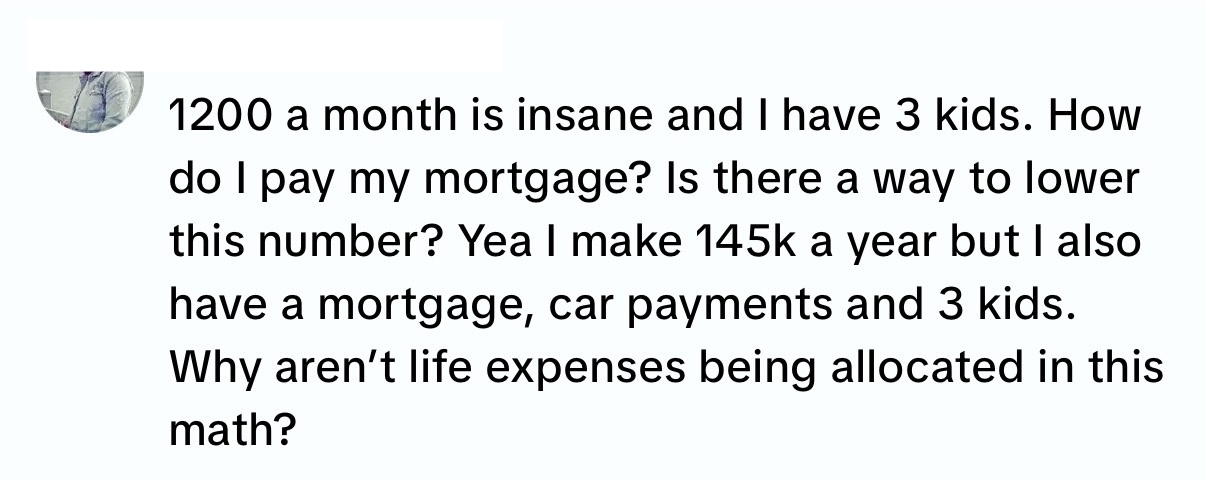
"$1,200 a month is insane and I have 3 kids. How do I pay my mortgage?"
That comment, posted by a borrower making $145,000 a year on one of our TikTok videos, captures a problem now showing up across federal mortgage data. Homeowners who qualified for an FHA or conventional loan while their student loan debt was paused (many on income-driven plans that allowed $0 monthly payments) are facing larger bills that the original underwriting math didn't account for.
The mortgage they got approved for assumed a low or $0 student loan payment. Today, the student loan payment is bigger, and household budgets also carry car loans and kids that are costing more than ever before.
A driving factor behind this trend comes from a Biden administration policy that weakened federal mortgage underwriting standards in 2021. Fast forward to today and the student loan borrowers that decision was supposed to help are now the ones paying the price.
In June 2021, HUD issued Mortgagee Letter 2021-13 (PDF File), scrapping a long-standing FHA rule that required lenders to count 1% of a borrower's outstanding student loan balance toward debt-to-income if a borrower didn't have a fully amortized payment plan (e.g. the standard plan).
In its place, the administration installed a far weaker standard: use the actual monthly payment from the credit report, or 0.5% of the balance if that payment was $0. Fannie Mae and Freddie Mac went a bit further, actually allowing a documented $0 payment to count as $0 in qualifying in some circumstances.
The change was rolled out in the middle of the federal student loan payment pause, when tens of millions of borrowers had no payment reporting at all, so millions of potential student loan borrowers were able to qualify for a mortgage using this loosened standard.
Officials framed the change as expanding access to homeownership for borrowers locked out by student debt. What it actually did was anchor the entire FHA approval process to a payment number that existed only because of emergency executive action and pending litigation.
When the courts struck down the SAVE plan and the payment pause ended, that false pretense ended. The mortgages did not.
The Rule Change That Re-Shaped Borrower Math
Before the pandemic, FHA underwriters were required to use the greater of the credit reported payment or 1% of the outstanding student loan balance when calculating debt-to-income.
On a $60,000 student loan balance, that meant a $600 monthly liability on the application, whether or not the borrower actually paid that amount.
HUD's Mortgagee Letter 2021-13 ended the 1% assumption. Lenders were instructed to use the actual documented monthly payment, even when that payment was below the credit report figure. If the documented payment was $0, the lender would assume 0.5% of the outstanding balance.
However, some underwriters went further, allowing borrowers on income-driven repayment plans to qualify with a $0 payment on the application if it could be documented.
The practical effect was that millions of borrowers (particularly first-time buyers with large balances) saw their qualifying DTI drop overnight. A borrower who would have been disqualified under the old 1% rule could now clear the threshold and close on a home.
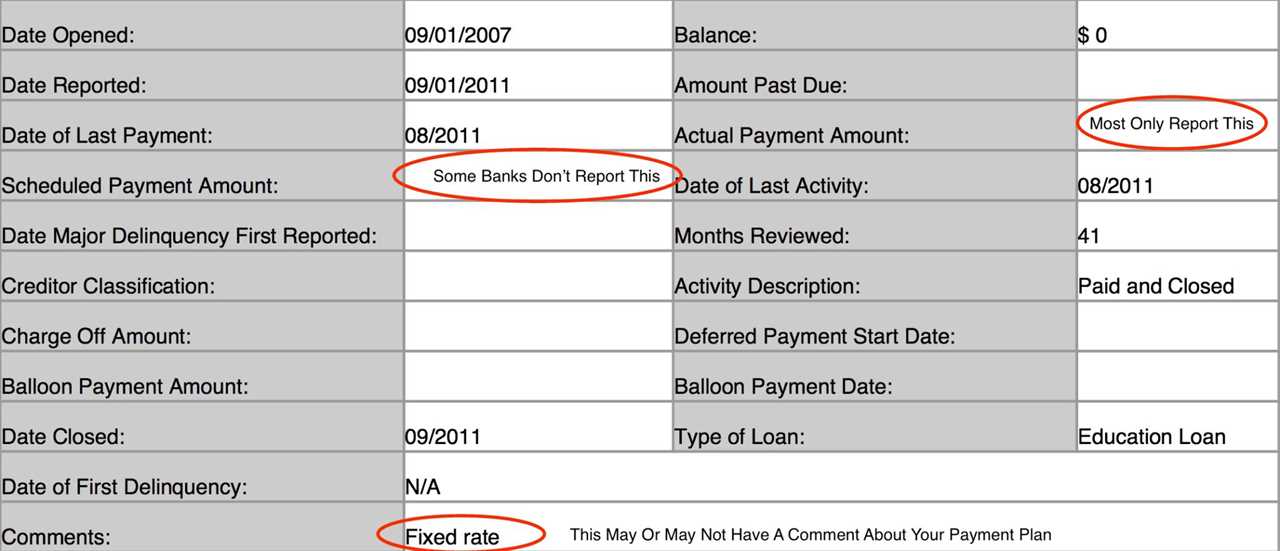
Here's how some lenders would report student loans on credit reports for homebuying. Many don't report the scheduled payment amount.
The Policy Critique
The flaw in the design was not that lenders were given flexibility. It was that the flexibility relied on a payment status that was being held in place by emergency executive action, regulatory rule-making, and ongoing litigation, not by what borrowers would eventually have to pay.
The SAVE plan, which produced $0 monthly payments for many low-income borrowers, was found unlawful by the Eighth Circuit Court of Appeals in February 2025. The Department of Education has signaled that borrowers remaining in the associated forbearance will have to change plans this summer and resume repayment.
That comes as roughly 12 million federal borrowers are now delinquent or in default, according to federal data summarized in recent reporting. Wage garnishment for defaulted borrowers is expected to resume in late 2026.
For mortgage underwriting, the problem is not theoretical. A household approved with a $0 payment on the loan application in 2023 or 2024 may now be facing a real student loan payment of several hundred dollars per month.
What The Data Shows
The overlap between student loan and mortgage stress is widening. The Urban Institute's March 2026 analysis found that of the 6 million student loan borrowers who were delinquent or in default, 15% also held a mortgage — close to double the 8% of borrowers recorded in 2019.
FHA loan performance is also showing the strain. FHA-insured mortgage delinquency reached 11.5% in Q4 2025, compared with 1.8% for conventional loans, according to MBA data.
Nearly 30% of FHA borrowers also carry student loan debt (a much higher share than conventional borrowers) and borrowers who are delinquent on student loans are up to 4x more likely to be delinquent on their mortgage, according to housing industry analysis.
Who Is Most Exposed
The borrowers most at risk are first-time homebuyers who used FHA financing between 2021 and 2024 while enrolled in an income-driven repayment plan or while their loans were in forbearance. Three conditions matter:
- A high student loan balance relative to income, where the 1% rule would have pushed DTI above the threshold but the actual or $0 payment kept it below.
- An FHA loan with a low down payment, which leaves little equity cushion if the household needs to sell under stress.
- A move out of the SAVE forbearance and into a standard or income-driven plan with a real monthly payment.
For these households, the math has changed. A $400 to $600 monthly student loan payment that was not in the underwriting model is now competing with the mortgage payment, insurance, property taxes, and rising utility costs.
The cushion that lenders assumed was real in 2021 is not necessarily real today.
What Comes Next
The Trump administration finalized new student loan rules that go live in July 2026 establishing the Repayment Assistance Plan as the main income-based repayment option for new borrowers.
However, all the student loan changes don't change or eliminate the mortgage underwriting problem. And with more borrowers set to resume payments in the coming months, it's likely that more student loan borrowers with mortgages will be in financial trouble.
Federal regulators have not signaled a rollback of the lax underwriting standard. The market is, effectively, running a live test of whether a rule designed for a temporary policy environment can hold up once that environment ends.
Don't Miss These Other Stories:
College Tuition Up 914% Since 1983, J.P. Morgan Reports
College Tuition Up 914% Since 1983, J.P. Morgan Reports
Student Debt Is Shrinking Retirement Savings, Fidelity Research Shows
Student Debt Is Shrinking Retirement Savings, Fidelity Research Shows
How To Buy A House When You Have Student Loan Debt
How To Buy A House When You Have Student Loan Debt
The post Student Loan Borrowers Are 3.8x More Likely to Be Behind on Their Mortgage in 2026 appeared first on The College Investor.
||
---------------------------
By: Robert Farrington
Title: Student Loan Borrowers Are 3.8x More Likely to Be Behind on Their Mortgage in 2026
Sourced From: thecollegeinvestor.com/81347/student-loan-borrowers-are-3-8x-more-likely-to-be-behind-on-their-mortgage-in-2026/
Published Date: Thu, 28 May 2026 14:11:15 +0000
Read More
Did you miss our previous article...
https://peaceofmindinvesting.com/clubs/best-12month-cd-rates-for-may-27-2026-up-to-405
.png) InvestingStocksToolsClubsVideosPrivacy PolicyTerms And Conditions
InvestingStocksToolsClubsVideosPrivacy PolicyTerms And Conditions