||
The MT5 Trading Sessions Indicator solves this by marking exactly when Asian, London, and New York markets are active. It displays colored boxes or vertical lines on charts, showing traders when institutional money flows into the market. This simple visual tool helps avoid dead zones and positions traders for high-probability setups during peak hours.
Understanding the Trading Sessions Indicator
The MT5 Trading Sessions Indicator is a visual overlay that marks the opening and closing times of the three major forex trading sessions on any chart. Unlike complex oscillators or moving averages, this tool doesn’t analyze price—it organizes time.
Here’s what it tracks: The Asian session (Tokyo) typically runs from 7 PM to 4 AM EST. London opens at 3 AM and closes at noon EST. New York operates from 8 AM to 5 PM EST. These times shift slightly with daylight saving changes, and quality indicators adjust automatically.
The indicator works by drawing boxes or shaded regions across these time periods. Traders usually see three distinct colors—maybe blue for Asian, green for London, and yellow for New York. Some versions display only vertical lines at session opens, while others fill the entire session period with semi-transparent backgrounds.
What makes this valuable? Forex isn’t like stocks with a single exchange. It’s a 24-hour market where liquidity and volatility shift dramatically based on which financial centers are awake. A 50-pip move during London hours might take six hours to develop during the Asian session.
How Professional Traders Apply Session Data
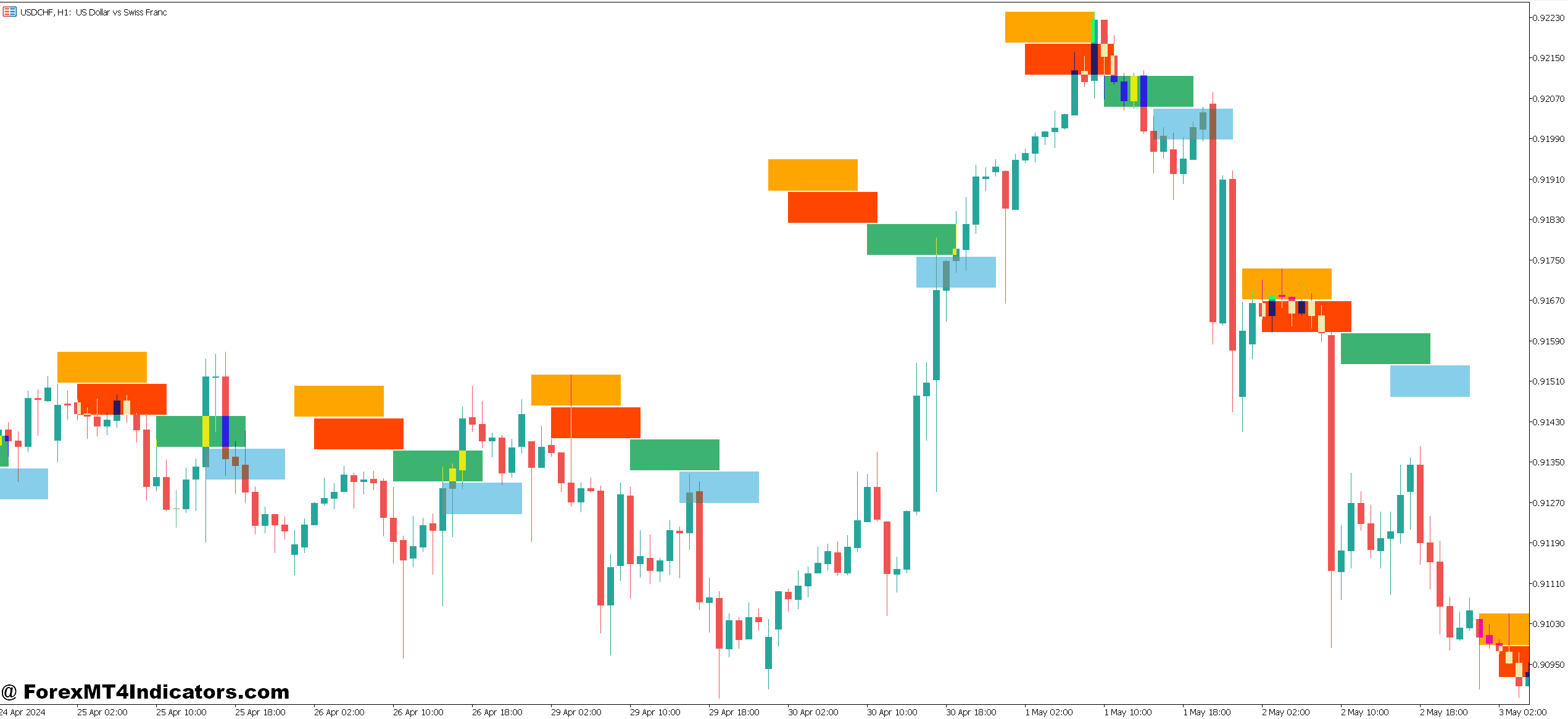
Smart traders don’t just watch sessions—they build strategies around them. The London-New York overlap (8 AM to noon EST) deserves special attention. That’s when both European and American institutions are active, creating the highest volume period. EUR/USD and GBP/USD often make their daily high or low during these four hours.
Here’s a real approach: Some traders avoid taking new positions during the last hour of a session. Why? Major players often close positions before heading home, leading to reversals that trap retail traders. If you shorted EUR/USD at 11 AM EST based on downward momentum, that 4 PM reversal might stop you out as New York desks square up.
The Asian session gets unfairly dismissed as “slow,” but it offers advantages. Pairs like AUD/JPY and NZD/USD show their best movement during Tokyo hours. Range traders actually prefer this session—prices tend to consolidate, making support and resistance levels more reliable. A disciplined trader can scalp 15-20 pips repeatedly off established ranges.
Session opens themselves create opportunities. The London open at 3 AM EST often produces a “breakout” candle as European traders react to overnight developments. Experienced traders watch for false breakouts here—the initial spike gets faded within 30 minutes. That’s a high-probability counter-trend setup if you catch it.
Customization and Settings That Matter
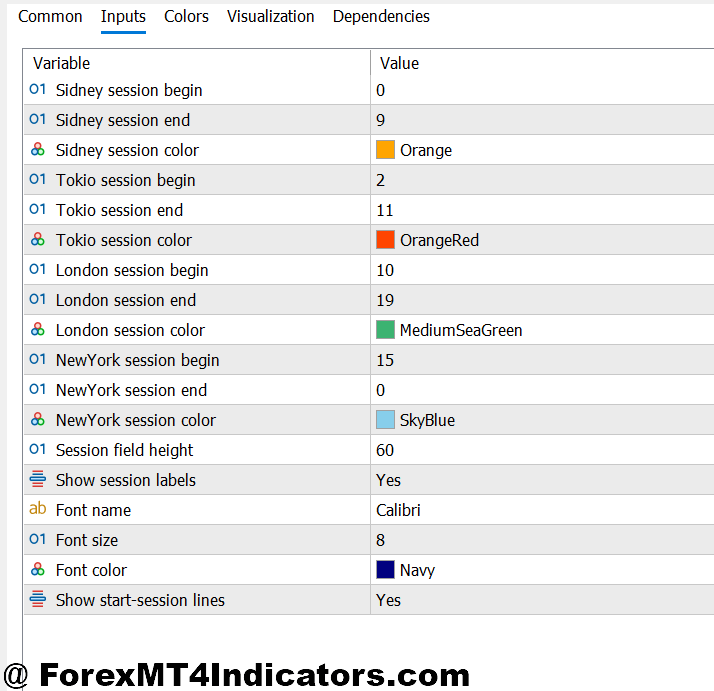
Most MT5 session indicators offer adjustable parameters. The basics include start and end times for each session, which you’ll need to set according to your broker’s server time. If your broker uses GMT+2, you’ll offset the session times accordingly.
Color selection might seem cosmetic, but it affects chart readability. Traders running multiple currency pairs on one screen often use subtle, semi-transparent backgrounds (30-40% opacity) to avoid visual clutter. Solid colors work better for single-chart focus.
Some versions let you toggle sessions on and off. A New York-based trader might disable the Asian session display if they never trade those hours. This keeps charts clean and focused on relevant information.
The line width and style matter for session boundary markers. Dashed lines work well if you’re also using support and resistance levels—they won’t blend together. Solid lines make session changes more obvious at a glance.
One often-overlooked setting: extending session boxes into weekends. Saturday and Sunday show no real trading, but displaying the boxes helps visualize where the week ended and provides context for Monday’s open.
Advantages Over Guessing and Clock-Watching
The primary benefit is situational awareness. You know immediately whether that consolidation on your chart is normal Asian session behavior or unusual London quiet. Context changes everything about how you manage positions.
It prevents timing mistakes. A breakout at 2:55 AM EST looks different when you realize London opens in five minutes. That’s likely just positioning before the real move, not the breakout itself. The indicator makes these nuances obvious.
Backtesting becomes more precise. When reviewing past trades, you can see exactly which session your entry and exit occurred in. Patterns emerge—maybe your win rate drops 20% on Asian session entries for EUR/USD. That’s actionable data you’d miss without session markers.
The tool also helps with broker selection. Different brokers offer varying spreads depending on their liquidity providers. If you notice your spreads widen dramatically during specific sessions, that’s feedback about your broker’s execution quality during those hours.
Limitations Every Trader Should Know

This indicator won’t tell you market direction. It shows when trading happens, not where price will go. A trader still needs a complete strategy—session timing is one piece, not the entire edge.
Holidays create exceptions that basic indicators don’t account for. On US Thanksgiving, New York volume drops to almost nothing despite the session technically being “open.” The indicator displays normally, but actual conditions differ drastically. You need to check economic calendars separately.
Session times are generalizations. Not every Tokyo trader starts exactly at 7 PM EST. Liquidity builds gradually, and the indicator’s sharp boundaries don’t reflect that reality. The best volume often comes 30-60 minutes after a session “opens.”
Some pairs don’t respect session patterns. Exotic pairs like USD/TRY or EUR/PLN have their own regional dynamics that don’t align with major session times. The indicator becomes less useful for these instruments.
Trading forex carries substantial risk. No indicator guarantees profits, and session timing doesn’t eliminate the possibility of losses. Market conditions can override typical session characteristics during major news events or crisis periods.
Comparison With Related Tools
The sessions indicator differs from a market hours clock widget, which just shows current time in different zones. The indicator gives historical context—you can see how price behaved during past sessions, not just what time it is now.
Volume indicators might seem redundant with session markers, but they’re complementary. Volume shows actual activity levels, which don’t always match expected session patterns. A quiet London session shows up in volume data but wouldn’t be obvious from session boxes alone.
Some traders prefer the Pivot Points indicator, arguing that key levels matter more than time. That’s valid, but both tools serve different purposes. Session markers help with entry timing once you’ve identified those key levels.
Asian range indicators specifically mark high and low of the Tokyo session, then project those levels forward. That’s more specialized than a general sessions indicator but serves range traders well for specific pairs.
Making Session Data Work for Your Strategy
Start by observing rather than trading. Mark session times on your charts for two weeks and just watch. Note which sessions produce trends versus ranges for your preferred pairs. This builds intuition that raw data can’t provide.
Combine session awareness with your existing strategy. If you trade breakouts, focus on session opens and the London-New York overlap. Range traders might target Asian session consolidations. The indicator doesn’t replace your strategy—it refines entry timing.
Consider setting alerts for session changes. Most platforms allow alerts at specific times. An alert 15 minutes before London open gives you time to review overnight price action and position for potential moves.
Don’t overcomplicate the setup. Three sessions, three colors, vertical lines or boxes—that’s sufficient. Adding every possible session (Sydney, Frankfurt, Hong Kong) creates clutter without much added value for most retail traders.
The real edge comes from understanding that different market participants dominate each session. Asian session is often bank flow and early positioning. London brings hedge funds and large speculators. New York adds mutual funds and retail volume. Each group has different objectives and timeframes. The indicator just reveals when each group is active—you need to understand their behavior.
Session-based trading isn’t a holy grail, but it’s a practical framework that works across different trading styles. A scalper uses it differently than a swing trader, yet both benefit from knowing when their target pairs are most likely to move. That’s the indicator’s core value: it doesn’t predict the future, but it sure helps you avoid trading when the market’s basically asleep.
Recommended MT4/MT5 Broker
XM Broker
- Free $50 To Start Trading Instantly! (Withdraw-able Profit)
- Deposit Bonus up to $5,000
- Unlimited Loyalty Program
- Award Winning Forex Broker
- Additional Exclusive Bonuses Throughout The Year
- Exclusive 90% VIP Cash Rebates for all Trades!

>> Sign Up for XM Broker Account here with Exclusive 90% VIP Cash Rebates For All Future Trades [Use This Special Invitation Link] <<
Already an XM client but missing out on cashback? Open New Real Account and Enter this Partner Code: VIP90
(Free MT4 Indicators Download)
||
-----------------------------------------------------
By: Tim Morris
Title: MT5 Trading Sessions Indicator
Sourced From: forexmt4indicators.com/mt5-trading-sessions-indicator/?utm_source=rss&utm_medium=rss&utm_campaign=mt5-trading-sessions-indicator
Published Date: Thu, 19 Mar 2026 07:00:02 +0000
Read More
.png) InvestingStocksToolsClubsVideosPrivacy PolicyTerms And Conditions
InvestingStocksToolsClubsVideosPrivacy PolicyTerms And Conditions